Why Rental Fleet Buying Is Different
Buying for a rental fleet is not the same as buying for a single contractor.
A fleet buyer has to think about:
- utilization rate
- operator abuse tolerance
- attachment compatibility
- spare parts stocking
- ease of transport
- resale value
That is why the “best mini excavator” for a rental company is usually not the one with the longest feature list. It is the one that creates the best return across repeated short-term hires.
1. Choose the Models That Get Used Most Often
For many rental businesses, the strongest-demand models sit in the compact-to-mid range:
- JL-10 / JL-12 for narrow access jobs, trenching, yards, and homeowner-facing projects
- JL-15 / JL-18 for landscaping, utility work, and general contractor demand
- JL-20 / JL-25 for heavier digging jobs where more breakout force and stability matter
If you try to stock too many sizes at once, spare parts and utilization planning become harder.
For many fleets, it is smarter to build around:
- one compact access model
- one core volume seller
- one higher-output machine
2. Keep Service Parts Simple
Fleet utilization drops quickly when service decisions become slow.
Before placing orders, confirm:
- filter commonality
- hose and seal availability
- track and undercarriage parts
- bucket tooth and wear part sourcing
- engine support plan
- attachment pin dimensions
This is especially important when a fleet expects multi-location deployment.
If machines in the same fleet use totally different service parts, downtime and stocking cost both rise.
3. Think About the Operator Experience
Rental customers do not always treat machines like owner-operators do.
So your fleet machines should be:
- easy to understand
- stable under mixed experience levels
- simple to inspect before and after hire
- straightforward to clean and maintain
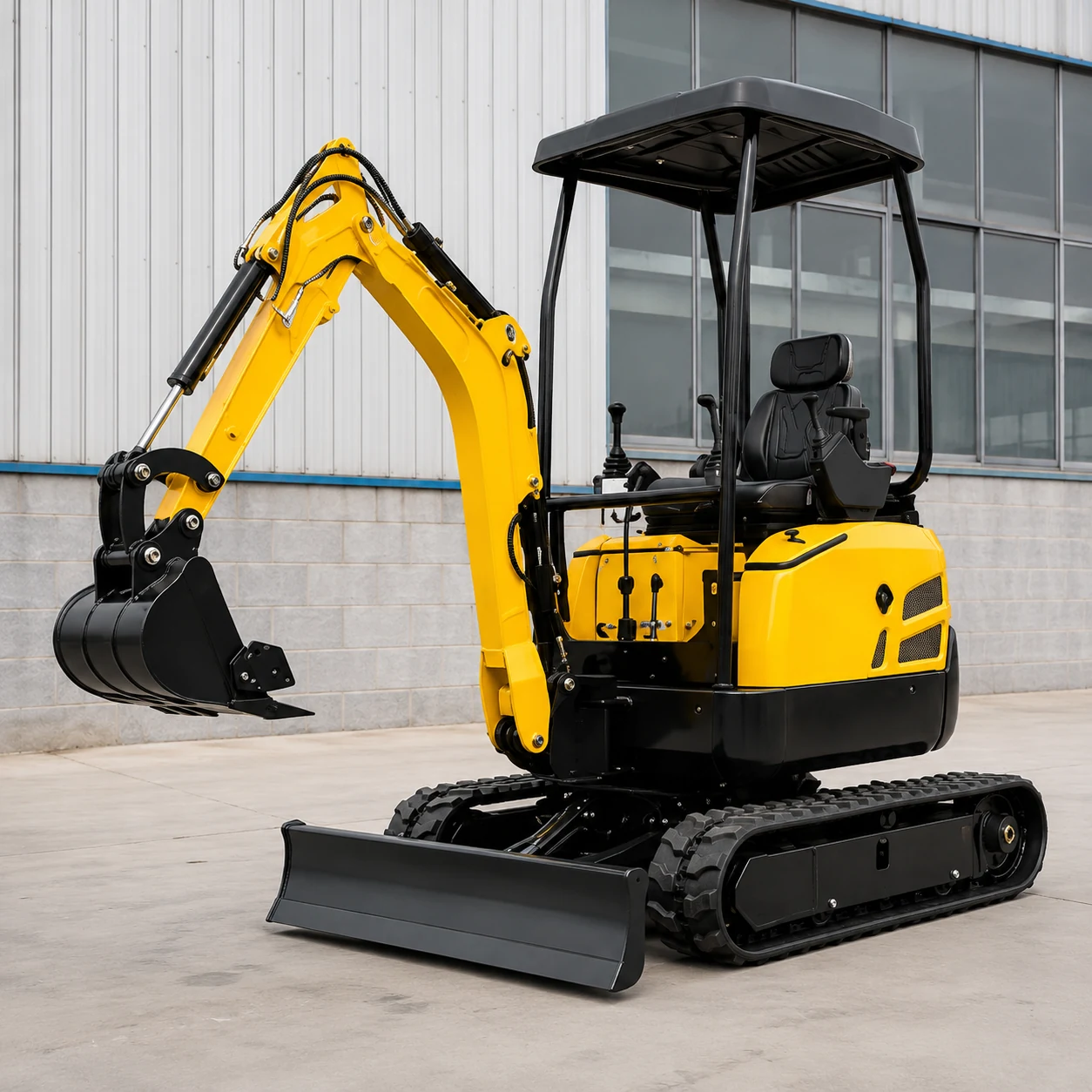
That is why many fleet buyers start with simpler canopy versions on high-turnover models, then add enclosed cab units only where market demand supports them.
4. Attachments Should Help Utilization, Not Complicate It
Attachment packages can improve revenue, but only if they are practical.
Common starter attachment strategy:
- auger
- rake
- ripper
- quick hitch
- hydraulic thumb on selected models
If every branch stocks a different bundle, utilization becomes inconsistent.
Standardize the attachment offer by machine class whenever possible.
5. Build the Fleet Around Transport and Space Limits
Fleet buyers should also review:
- trailer compatibility
- entry width restrictions
- yard loading layout
- branch delivery vehicle limits
- local contractor jobsite access conditions
This is one reason compact models keep winning in the rental market. They fit more transport and storage scenarios while still covering a large share of customer demand.
Recommended Starting Models for Fleet Buyers
Depending on your market, a practical starting lineup may include:
- JL-10 mini excavator for narrow access and first-time fleet demand
- JL-15 mini excavator for general-purpose landscaping and contractor work
- JL-25 mini excavator for higher-output jobs where more digging force is needed
If your rental business also serves colder regions or longer-duration hires, compare canopy and cab versions before finalizing your mix.
Final Takeaway
The best mini excavator for a rental fleet is usually the machine that is:
- easy to move
- easy to service
- easy to standardize
- easy to re-rent
If you want, send us your target market, fleet size, and preferred machine range. We can help recommend a more practical model mix and attachment plan for your rental business.